

At just 20 years old, a young woman with Colombian roots leads a Blockchain university community in Florida, USA.
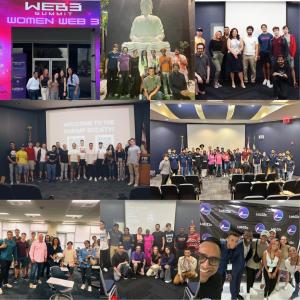
Juliana Echavarría is currently the founder and president of the first club dedicated to Web3 and blockchain education at FIU Florida International University and an ambassador for Women in Blockchain.
By: Margarita E. Somos Mujer Panama Magazine
The Pink Girl
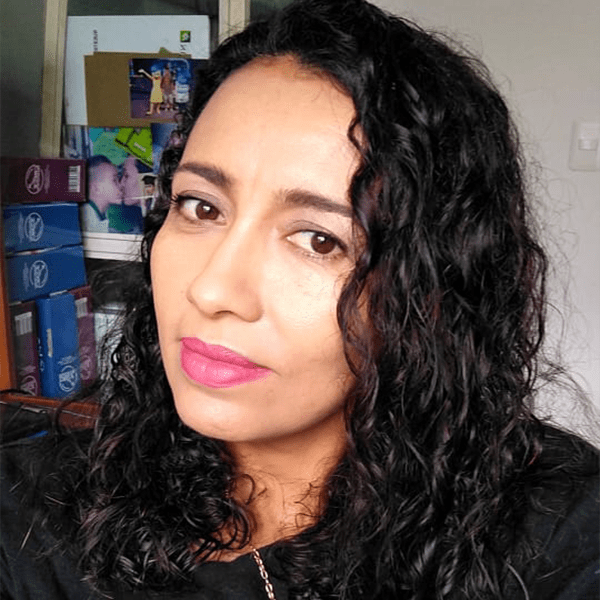
She officially declares herself a lover of pink; her hair gives her away. She finds inspiration in the symbolic meaning of pink, which transmits femininity, creativity, love, and tranquility. That’s why this color never separates from her wardrobe or her room. Her beautiful appearance, coupled with a sparkling smile and contagious energy, has allowed her to work sporadically as a model and participate in music videos. This suggests that she is a girl like many others, concerned about her physical appearance, aware of social networks, or a follower of the latest artist. And this may be true, and there is nothing wrong with her interests, but what few would imagine is that this young woman leads one of the communities that have traditionally been reserved for men: the world of technology.
Intelligent and alert, she knew how to take advantage of the global convergence moment in 2020. In the midst of a pandemic, at just 18 years old, she asked herself other questions besides how she looked with a mask. She wondered what the future would hold for her, but above all, she was concerned about her financial future. Following her curiosity and being drawn to fashion, she decided to invest her savings in bitcoin.
In 2020, the general fear and instability generated by the pandemic allowed bitcoin to skyrocket as the new answer to virtual transactions and one of the best long-term investments. This helped bitcoin’s price to increase from $11,000 in July 2020 to a peak of $66,000 in October 2021. Since then, the price has not exceeded this level. This favorable situation sparked Juliana’s interest in the technology behind bitcoin. It was her first contact with the world of blockchain, the technology behind cryptocurrencies, and she wanted to understand it and ensure she wouldn’t be left behind.
A New University Club
She knew that blockchain was more than just cryptocurrencies; it was information management and security with applications in various fields such as economy, finance, real estate, and legal issues. She discovered Web3, a new website that marked a before and after in the way people communicate and is expected to dominate the future. This subject fascinated her.
«When I entered the university, I was still very enthusiastic about my research on bitcoin and blockchain technology, and I kept talking about it. But nobody understood me; there was a prevailing ignorance, and it seemed that something was not right. I wanted people to learn more about this technology and its advantages. That’s why I proposed to the university to start a blockchain club.»

The university responded by giving her a period of two months to gather at least 10 members for the new club. At first, she thought it would be easy, but she soon faced the reality of the mistrust and disbelief surrounding everything related to this world. The first impression was that she was inviting them into a scam or a Ponzi scheme. It was also challenging to convince the university administration that she did not intend to promote cryptocurrencies, trading sites, or provide financial advice. She made it very clear to them that her intention was to educate people about a technology that would soon permeate all social spheres, and it would be beneficial for the university to be a pioneer in this regard.
With her brave and tenacious spirit, she knew she couldn’t give up. Finally, in July 2022, she managed to gather the first 10 members. Little did she know that in less than a year, the club would grow to almost 300 members. The visibility of the club and its participation in congresses, talks, and events allowed her to join Women in Blockchain Miami, a subdivision of Women in Blockchain USA. They have already held their first event in Miami with the theme of real estate and smart contracts, which aims to help the sector avoid fraud and have more secure contracts.
¿Was She a Leader?
She states that she did not feel like a leader, and at her school, she was perceived as shy. But she believes that what made the difference is that she made the decision to be a leader. When faced with an issue she was so passionate about, and knowing that no one else wanted to lead, her courageous decision enabled her to awaken the qualities needed to lead communities. She believes that anyone can do it if they feel true passion.
She recognizes that the road has not been easy; she had to seek help from authors dedicated to leadership to understand and exercise it. Delegating, motivating, and working as a team were not part of her world a year ago. But now, faced with her responsibility as president of the club, she knows that it is her day-to-day reality.
«I recommend the book Tribes by Seth Godin, which gave me the courage to be a leader. In one of its chapters, Seth tells the story of a person who wants to do something but is waiting for someone else to come and do it. That person’s role is to wait and wait, and not take action. I didn’t want to be that kind of person. That’s why, when people find out that I am studying Social Communication and not technology, and yet I am leading a blockchain club at my university, they are surprised and ask me why. I answer that if I had waited for someone with the right knowledge to create the club, it is possible that it would not exist.»
For her, the future of blockchain is very broad, and when it is implemented, no one will notice. The changes have been subtle but impactful, and knowledge of technology is on that path, which will not stop. Its daily applications are vast and beneficial in legal and government aspects, with significant implications for the security of transactions, making fraud difficult to occur. It is also applicable to copyright, data protection, contracts, finance, art, and more.
Women & Technology
With her youth sprouting from every pore, she advises women to take ownership of issues that may seem alien to them but can be understood with sufficient interest. Technology has no gender and is not exclusive. In the case of Web3, more and more women are leading the sector, contrary to what happened with Web2.

«The Web3 community is very inclusive. More women are joining and leading the world, and my presence as a woman facilitated the entry of many women into the club, who saw me as a role model.»
What does she expect from the future?
She is set to graduate from FIU and may hand over the club’s presidency to another student upon her departure in August 2023. However, she will remain an advisor for the club, hoping to mentor its members and contribute the knowledge she has acquired in the past year to actively contribute to its growth. She is currently developing a venture in the field of artificial intelligence, which also falls under Web3 technology because she is interested in continuing her educational process. Regarding blockchain, she states that centralized institutions such as banks and other organizations know that they cannot reject this technology; they are obliged to provide solutions based on these technologies, or they will collapse. Thus, Web3 is practically unstoppable, and women in technology, like her, will not stop either.
Margarita E. Echavarría es comunicadora social – periodista de la Universidad de Antioquia con Maestría en Gestión Cultural.
 Somos Mujer Digital
What an inspiring story! Juliana’s journey into the world of blockchain is truly remarkable. I was wondering, how has the university responded to the growth and success of the blockchain club led by Juliana? Have they shown interest in expanding the program and offering more resources to support it?
Me gustaMe gusta